
 See Our Latest Article on HelloNation

Balance problems can sometimes be influenced by the neck and spine, but spinal alignment is only one part of a much larger system. The inner ear, eyes, brain, muscles, joints, blood pressure, medications, and feet all contribute to steadiness.
For residents in Haverstraw, NY, this distinction matters because dizziness or unsteadiness should not automatically be attributed to posture or treated as a simple alignment issue. Some causes are minor and temporary, while others require prompt medical evaluation.
How does the spine affect balance?
The spine affects balance mainly through movement, posture, and sensory information—not because the spine acts as a single mechanical “balance switch.”
The neck contains many small sensory receptors in its muscles and joints. These receptors help the brain understand the position of the head in relation to the trunk. The brain combines that information with signals from the inner ear and eyes to coordinate posture, walking, and head movement. Research reviews describe this interaction among cervical proprioception, vision, and the vestibular system as an important part of postural control. ([pubmed.ncbi.nlm.nih.gov](https://pubmed.ncbi.nlm.nih.gov/25414660/?utm_source=openai))
If the neck is painful, stiff, injured, or held in an unusual position for a prolonged period, those signals may become less reliable. A person may feel off-balance, disoriented, or uncomfortable when turning the head. This is sometimes described as cervicogenic dizziness, although it is a diagnosis of exclusion because other causes of dizziness must be considered first. ([pmc.ncbi.nlm.nih.gov](https://pmc.ncbi.nlm.nih.gov/articles/PMC9655761/?utm_source=openai))
What does “spinal alignment” mean in practical terms?
In everyday discussion, spinal alignment usually refers to how the head, neck, shoulders, pelvis, and trunk are positioned during standing and movement. The term does not mean that every spine must look identical or remain perfectly straight.
Normal bodies have natural curves. Posture also changes throughout the day. Reading, working at a computer, carrying a child, gardening, driving, or looking down at a phone can temporarily alter how the head and trunk are held. A posture becomes more relevant when it is associated with persistent pain, restricted movement, weakness, altered walking, or repeated balance symptoms.
A visible difference in shoulder height or head position does not automatically prove that the spine is causing dizziness. Balance testing, a neurological examination, a review of medications and health history, and sometimes hearing or vestibular evaluation may be needed to identify the actual cause.
Which balance symptoms may be related to the neck?
Neck-related balance symptoms are more likely when dizziness or unsteadiness occurs alongside neck pain or stiffness, particularly after an injury or during certain head movements.
Possible patterns include:
- A feeling of floating, swaying, or being off-center rather than a strong spinning sensation
- Unsteadiness that increases when turning or extending the neck
- Headache, upper shoulder tension, or reduced neck motion
- Difficulty coordinating head and eye movements
- Symptoms that began after a collision, fall, sports injury, or other neck strain
These patterns are not proof of a spinal cause. Inner-ear disorders can also worsen with head movement, and migraine, concussion, vision problems, medication effects, and neurological conditions can produce similar symptoms.
A systematic review found that people with some spinal pain conditions may have altered perceptions of verticality and postural control, but the findings are not sufficient to conclude that spinal alignment is the primary cause of balance problems in every person. ([pmc.ncbi.nlm.nih.gov](https://pmc.ncbi.nlm.nih.gov/articles/PMC7356295/?utm_source=openai))
Can poor posture cause vertigo?
Poor posture may contribute to neck strain or altered sensory input, but it does not explain every form of vertigo. True vertigo often involves a spinning or rotational sensation and may come from the inner ear or brain rather than the spine.
Neck-related dizziness is generally considered only after more common and potentially serious causes have been assessed. A person with spinning sensations, hearing changes, ear pressure, nausea, new headaches, fainting, or neurological symptoms should not assume that posture is responsible.
The difference between dizziness and imbalance can also be useful:
- Vertigo: a sensation of spinning or movement when the surroundings are still
- Lightheadedness: feeling faint, weak, or as if one may pass out
- Unsteadiness: difficulty walking or maintaining a stable position
- Visual disorientation: discomfort in busy environments or while moving the head
These descriptions can help a healthcare provider determine which systems may need evaluation.
What local conditions can make balance harder?
Seasonal conditions can add to ordinary balance challenges. In winter, ice, slush, wet steps, and uneven walkways can increase fall risk even in people who normally walk well. Older homes and multi-level residences may also involve stairs, narrow transitions, or limited lighting.
Inside the home, practical precautions include:
- Keeping stairways and hallways well lit
- Using handrails on steps
- Removing loose mats and clutter from walking paths
- Wearing supportive footwear indoors and outdoors
- Taking extra care when moving from a warm indoor setting onto wet or icy surfaces
- Avoiding quick head turns when already feeling unsteady
These steps do not correct a spinal condition, but they reduce the chance that dizziness or impaired balance will lead to a fall. The CDC identifies balance and strength exercises, discussion of fall risks, and attention to environmental hazards as useful prevention measures. ([cdc.gov](https://www.cdc.gov/steadi/pdf/STEADI-Brochure-StayIndependent-508.pdf?openyts=1713826494785&utm_source=openai))
When should balance problems be treated as urgent?
Sudden balance problems require urgent attention when they occur with other possible signs of a stroke or serious neurological condition. These include sudden trouble speaking, facial drooping, one-sided weakness or numbness, severe unexplained headache, sudden vision changes, confusion, or major loss of coordination. The CDC advises calling 9-1-1 for sudden dizziness, loss of balance, or trouble walking when these symptoms may indicate stroke. ([cdc.gov](https://cdc.gov/stroke/signs-symptoms/index.html?utm_source=openai))
Emergency evaluation is also appropriate after a significant head or neck injury, especially if there is worsening headache, repeated vomiting, unusual drowsiness, confusion, weakness, or new difficulty walking. Dizziness and balance problems can occur after concussion and may sometimes be delayed. ([cdc.gov](https://cdc.gov/traumatic-brain-injury/signs-symptoms/index.html?utm_source=openai))
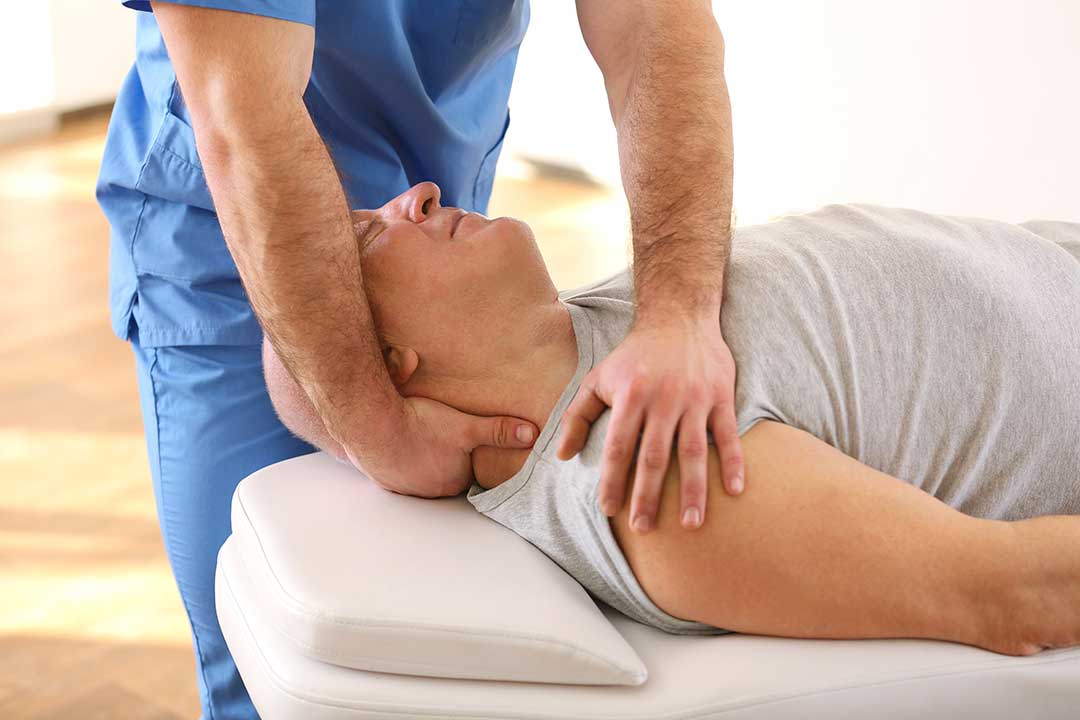
Is neck manipulation appropriate for balance problems?
Neck manipulation should not be used as a substitute for identifying the cause of dizziness. A careful evaluation should come first, particularly if symptoms are new, severe, unexplained, or associated with headache or neurological changes.
The National Center for Complementary and Integrative Health notes that cervical artery dissections are rare but serious and that sudden neck movements, including those involved in some manipulation techniques, have been associated with these artery tears. Research remains unsettled about whether manipulation directly causes such events, but the potential risk should be discussed before neck manipulation. ([nccih.nih.gov](https://www.nccih.nih.gov/health/spinal-manipulation-what-you-need-to-know?utm_source=openai))
Safer care decisions depend on the individual situation. Gentle mobility work, strength training, vestibular rehabilitation, balance exercises, and treatment of an underlying medical condition may all be considered, but the appropriate approach depends on the source of the symptoms.
Persistent or recurring imbalance deserves a structured assessment rather than a simple assumption that the spine is “out of alignment.” The neck can influence balance, especially through proprioception and pain, but it is one part of a coordinated system that also includes the inner ear, vision, brain, circulation, muscles, and environment.
